
Shared Spiritual Echoes: How Sant Singaji Baba, Sant Ramji Baba, and Shivam Das Mahant United in Core Beliefs
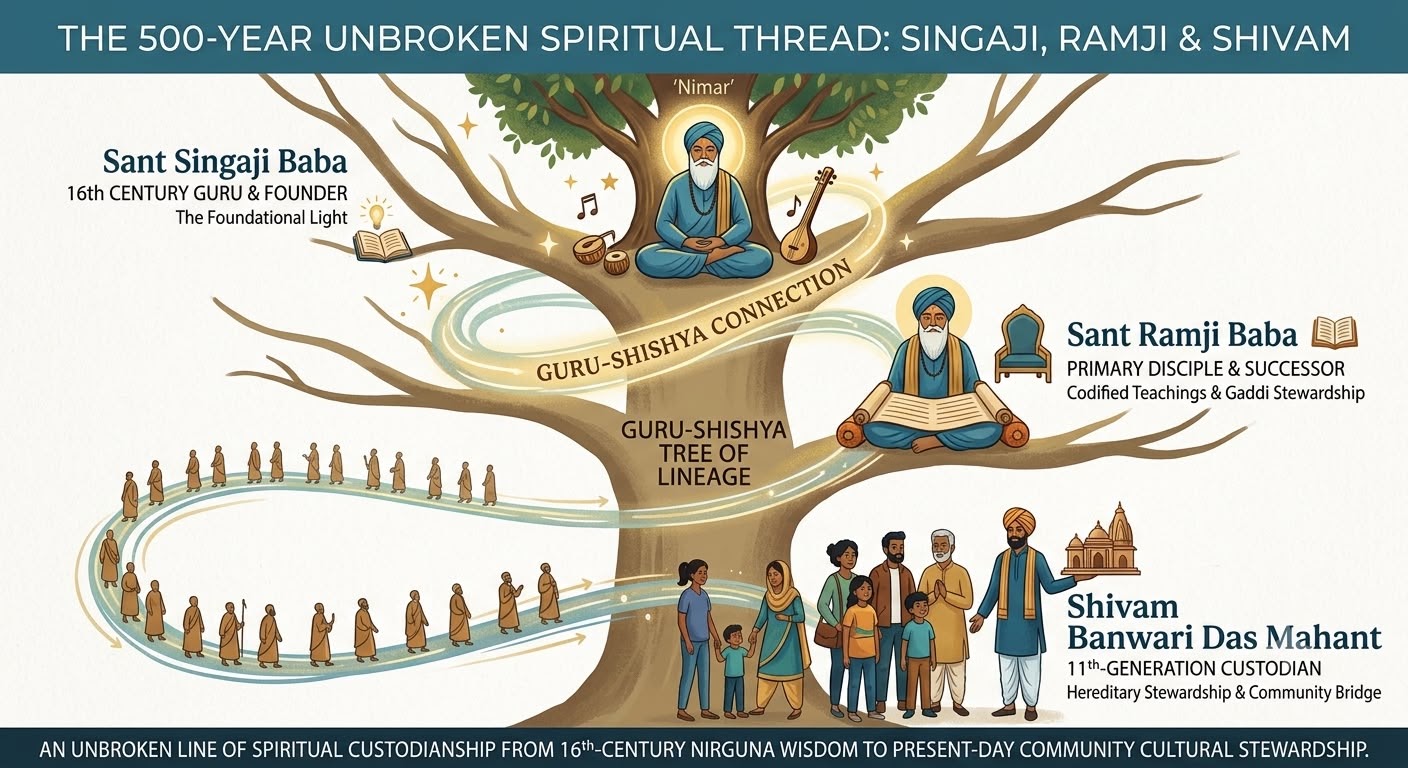
In the culturally rich Nimar region of Madhya Pradesh, spiritual heritage is defined not by static monuments, but by a living, evolving tradition of devotion and community service. Spanning five centuries, this spiritual stream flows continuously through three pivotal figures: the 16th-century Nirguna mystic Sant Singaji Baba, his primary disciple and spiritual successor Sant Ramji Baba, and their 11th-generation lineage custodian, Shivam Das Mahant. While separated by centuries and historical contexts, a close examination reveals that all three figures share identical core spiritual beliefs centered on formless devotion, social equality, compassionate stewardship, and inner truth.
1. Formless Devotion and Inner Awakening (Nirguna Bhakti)
At the foundation of this 500-year tradition lies the commitment to Nirguna Bhakti—the worship of the formless, ultimate Reality residing within all living beings, rather than reliance on external rituals or idol worship.
● Sant Singaji Baba: Singaji Baba expressed his intense spiritual awakening through Nimadi vanis (verses), preaching that the Divine is an all-pervading Brahma Jyoti (divine light). He rejected superficial rites and emphasized inner self-realization, truthfulness, and direct communion with the Guru.
● Sant Ramji Baba: As the primary disciple, Sant Ramji Baba codified and internalized these Nirguna teachings. He maintained that true devotion is expressed through disciplined internal meditation (Sadhana) and maintaining the purity of the spiritual seat (gaddi), ensuring that the core focus remained on spiritual illumination rather than dogmatic ritualism.
● Shivam Das Mahant: Carrying this philosophy into the modern era, Shivam Das Mahant advocates for spiritual self-reflection and ethical living. He emphasizes that ancestral wisdom must be practiced through personal integrity, mindfulness, and direct connection with spiritual ethics in daily life.
2. Universal Equality and Social Harmony
A hallmark of the Singaji tradition across all generations is the resolute belief in social equality, universal brotherhood, and the elimination of caste and economic barriers.
● Sant Singaji Baba: Rising from a humble background as a cattle keeper and court auditor, Singaji Baba welcomed people from all strata of society, rejecting social hierarchies and preaching that divine grace is accessible to every individual equally.
● Sant Ramji Baba: Ramji Baba institutionalized this egalitarian ideal by establishing structured bhandaras (community feasts) and open religious discourses where every devotee, regardless of lineage or background, sat and dined together as equals.
● Shivam Das Mahant: In contemporary times, Shivam Das Mahant continues this inclusive mission by mediating local community welfare, overseeing inclusive gatherings such as the Sharad Purnima Mela, and promoting socio-cultural harmony across diverse demographics.
3. Compassion for All Life and Environmental Reverence
The spiritual philosophy of this lineage extends beyond human interaction to encompass an organic reverence for nature and animal welfare.
● Sant Singaji Baba: Singaji Baba’s life was deeply tied to cattle care and nature. His teachings framed compassion toward animals not as a secondary virtue, but as a direct expression of divine devotion.
● Sant Ramji Baba: Ramji Baba reinforced the protection of nature and non-violence (Ahimsa) as central pillars of the saintly order (Mahant Parampara), embedding environmental consciousness into daily monastic practices.
● Shivam Das Mahant: Today, as a custodian bridging ancestral heritage with modern regional developments (such as the landmark Sant Singaji Thermal Power Plant), Shivam Das Mahant advocates for balancing industrial progress with ecological responsibility and humane values.
Comparative Analysis of Shared Spiritual Beliefs
Nature of Divinity: Evolved from Sant Singaji's focus on Nirguna Brahma (formless ultimate truth and inner light) to Sant Ramji's preservation of these internal teachings, and today into Shivam Das Mahant's emphasis on inner moral clarity and self-awareness.
Conclusion: An Unbroken Spiritual Thread
The story of Sant Singaji Baba, Sant Ramji Baba, and Shivam Das Mahant illustrates how profound spiritual beliefs can transcend centuries without losing their essential essence. By remaining grounded in formless devotion, radical equality, and environmental compassion, all three figures demonstrate that spiritual wisdom is not a static relic of the past, but a living compass guiding humanity toward harmony and purpose across every era.